
The (Briefly Expensive) Road to Affordability
The Schrödinger's cat of construction budgets.
We’re here to plant our flag. We— as an industry— can make better buildings, faster, and more affordably, with healthy materials that don’t cost the planet. No trade offs. Full stop. We’re quietly doing this work every day, and wanted to share it here.
Construction is never going to be inexpensive. But we’ve learned one clear lesson: project costs are lowered by investing in efficiency. It might seem counterintuitive when you first look at a quote, but stick through the explanation below. We’ve taken years of collected data and hard-won firsthand experience to make a solution that literally delivers economic value across time and space. This sounds far-fetched; it’s not.
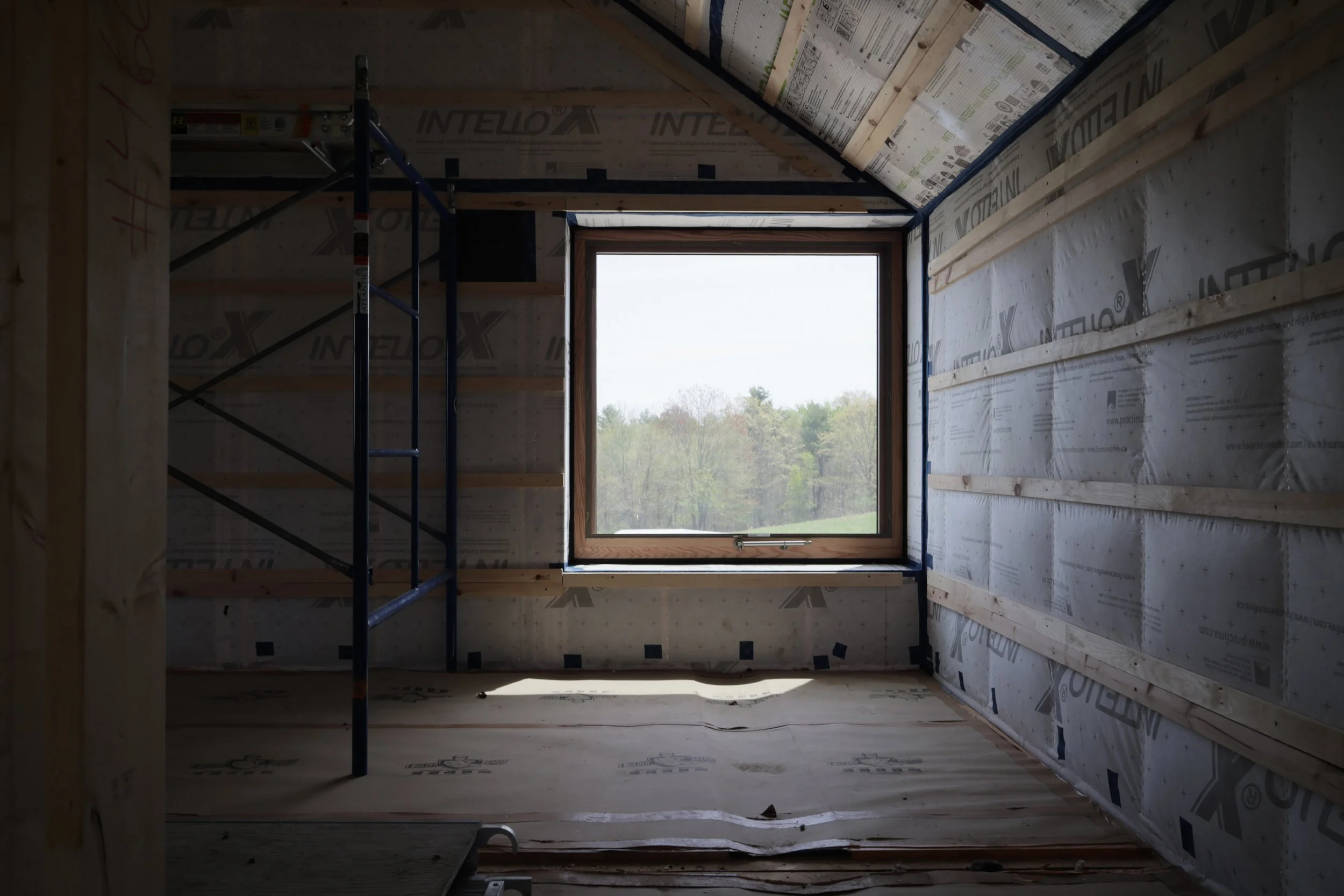
Focusing on reducing each line item in a construction budget is tempting. It’s hard to avoid doing this! And it makes a certain amount of sense. There is a hair-pulling level of nuance in construction budgets, but these things are interconnected. And remember that there are two ways to lower the overall budget:
First option is to Reduce Costs. (This is where the rookies get stuck, slashing at the spreadsheet.)
The second is to Increase Efficiency. (This unlocks superpowers.)
Great. Two paths to savings. So let’s consider them.
We’ll give you the price of the building envelope. The structural, weathertight shell. The Reduce Costs approach would force you to look at our price in isolation, compared to others offering the same thing. And in doing so you’ll see that — yep, no doubt about it— Croft costs more than some other options.
We get compared most often to site built construction and SIP packages. (SIP stands for Structural Insulated Panels…basically a petroleum-filled-sandwich of cheap Oriented Strand Board and thick foam).
The numbers on their quote will be less, (partly because they include fewer things), but again- this is hard to notice at first. But the bigger story is that you don’t want just a weathertight shell! You want a building. A glorious, complete building with lights and plumbing and a place to make a decent cup of coffee. The building envelope is but one stepping stone on the path to completion- so don’t aim for the cheapest product. Aim for the cheapest overall solution.
This brings us to the second approach: Increase Efficiency.
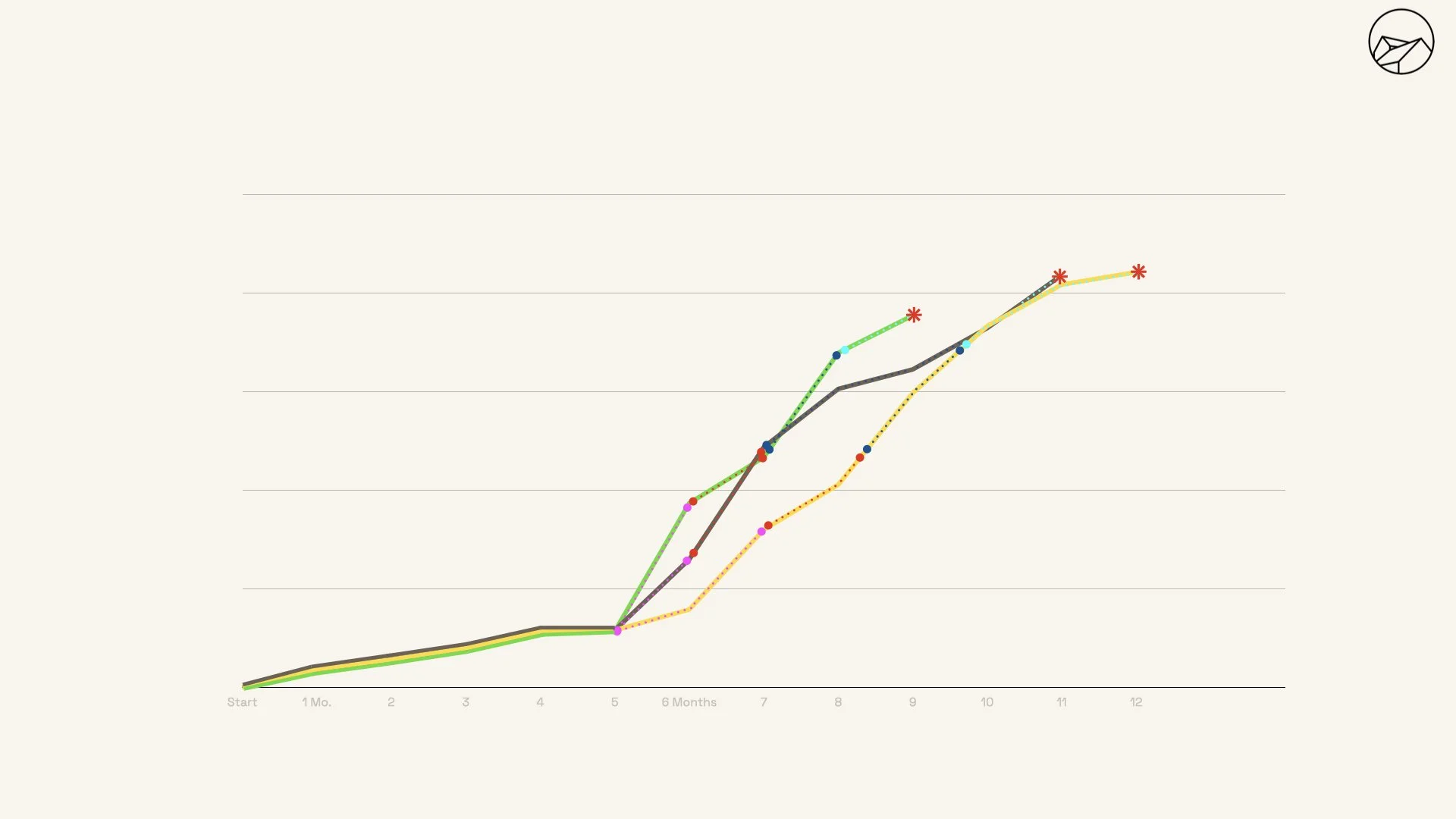
The ability for efficiency to unlock cost savings is wildly undervalued in the construction sector. But it adds up, as you’ll see below. Croft is (briefly) more expensive and ultimately more affordable, like the Schrödinger's cat of construction budgets.
The chart(s) below illustrate the process and cost of a build occurring over time. The phases of construction are separated as neatly as possible, each with their own costs. By categorizing portions of build scope we can start to see how one decision informs costs downstream. Let’s begin:
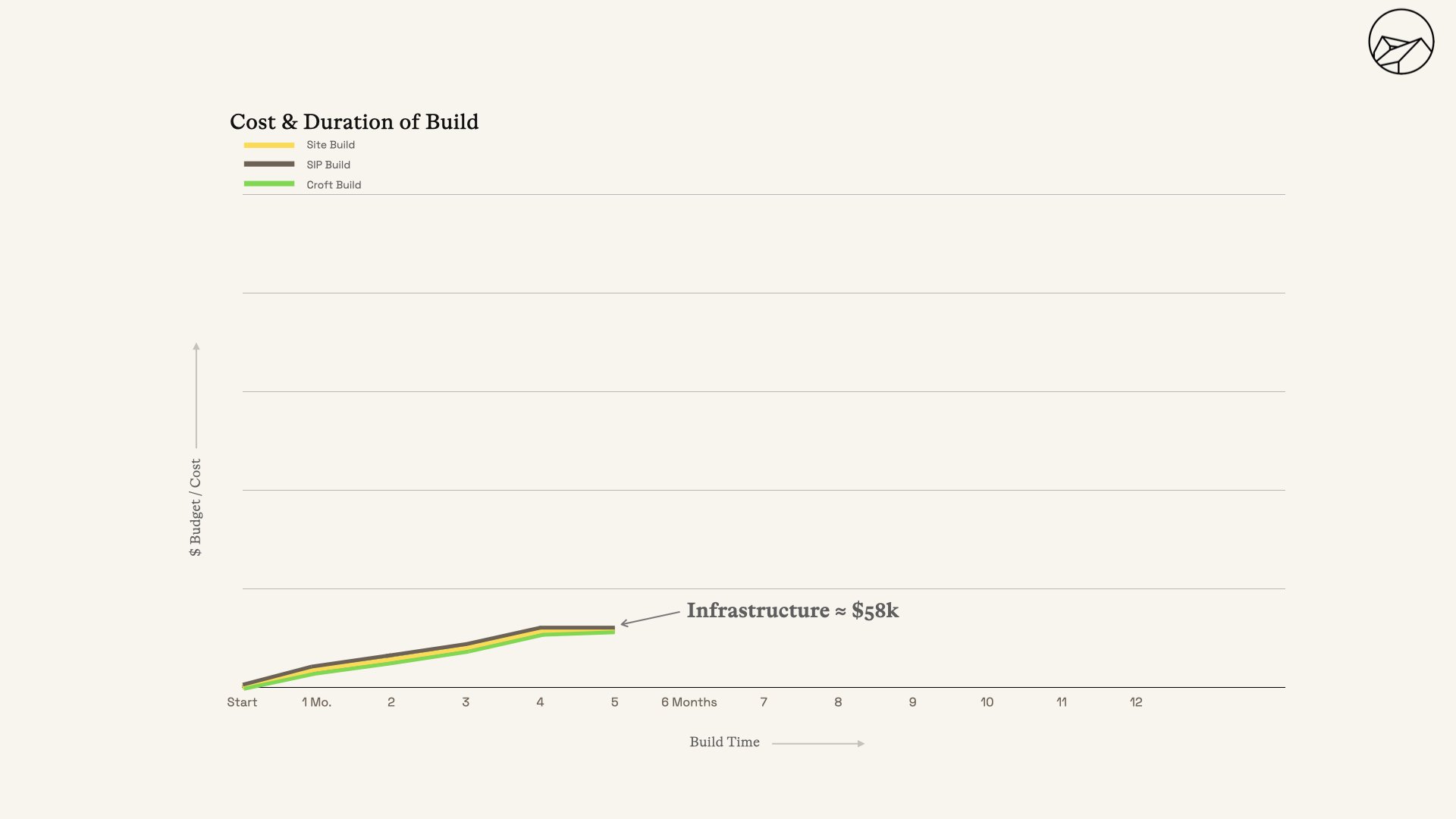
First is the cost of getting basic infrastructure in place on a new site. Water, electricity, a plan for wastewater, and a clear, flat place to locate the building. It’s frustratingly easy to spend five figures only to get a muddy hole in the ground, with some pipes sticking out of it. (Look for a future blog post where we will solve this problem, but let’s not get distracted.) These costs just get you to the starting line. The lesson? Developing habitat for humans on a piece of earth already has significant costs. Next, let’s add a building envelope on top of that foundation:
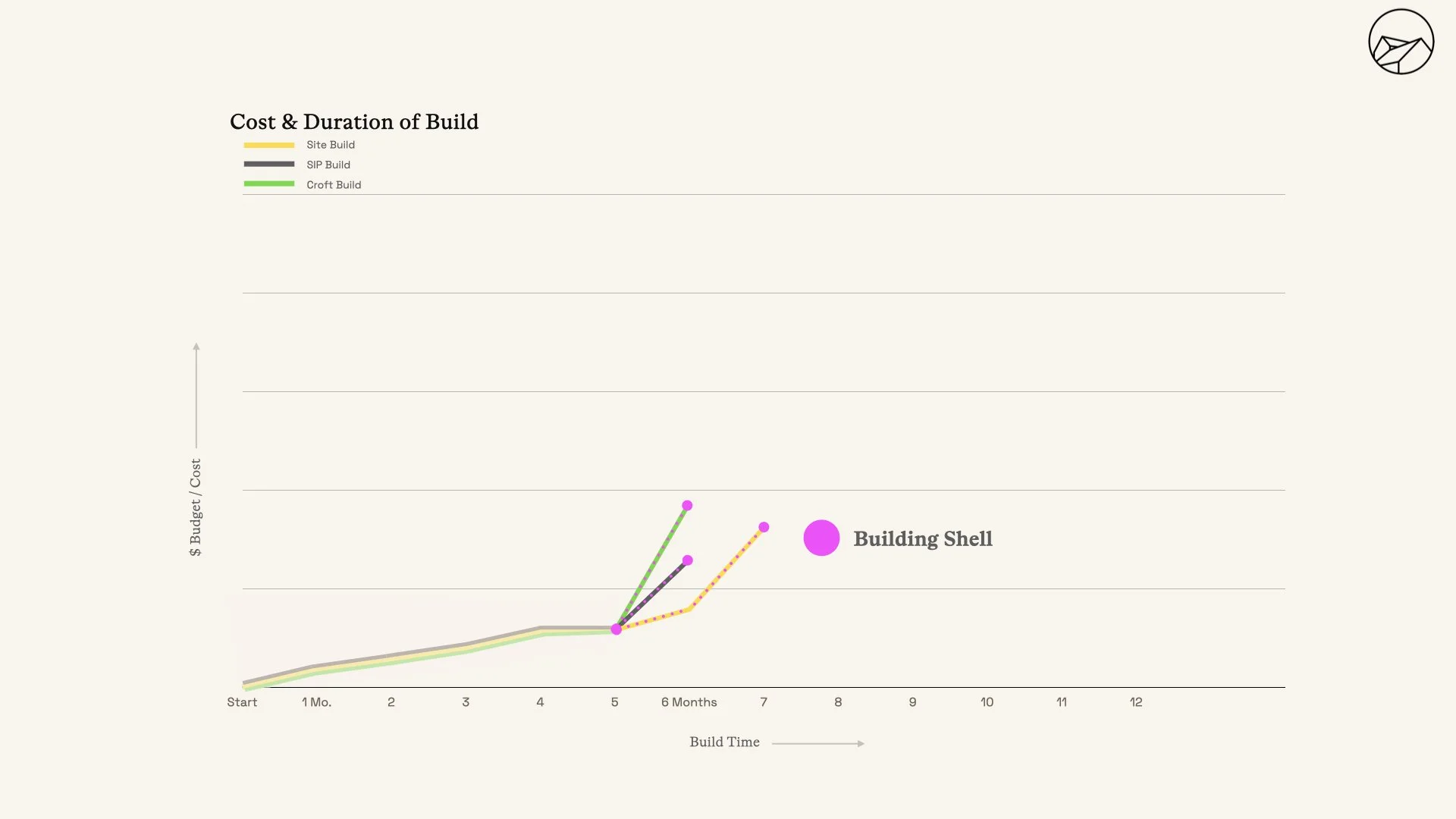
Yep, Croft’s building shell costs more. But it would be foolish to think this is the whole story. Making a decision based on this price would be like selecting a car based on the price of the windshield wipers. Sure, it’s part of the budget, but it isn’t a particularly helpful number in isolation. Next step is getting that thing wrapped to the weather with the building components installed, ready for all the services, utilities, and finishes to follow:
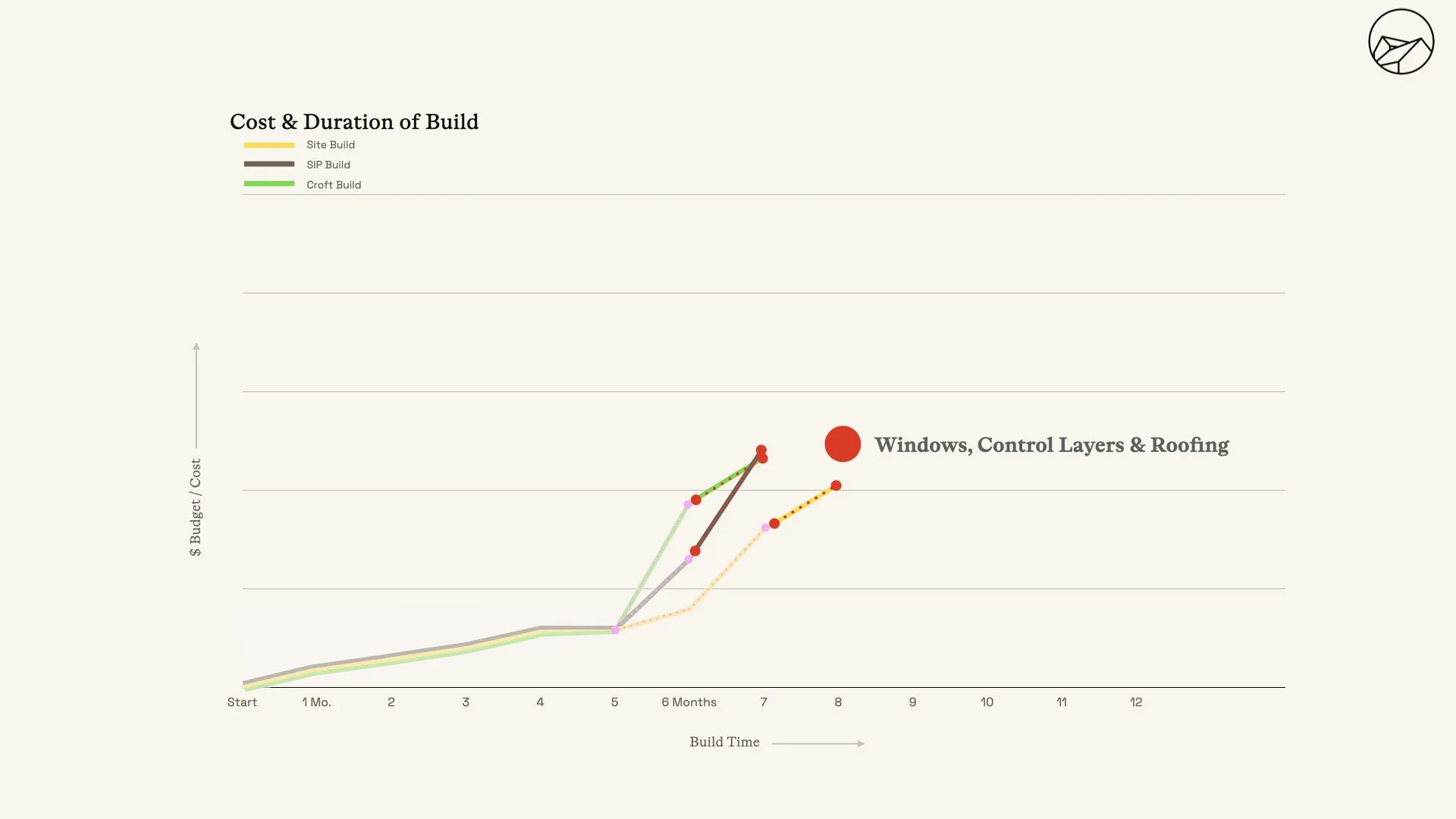
Notice the shifts occurring: SIP panels were previously the most “affordable” option, but the carpenters have to spend extra time doing laps around the building— wrapping, strapping, and adding all the layers that get the building weathertight. Windows are site installed for both SIP and site approach, adding time, labor, and cost. With the Croft package, windows arrived pre-installed from the factory. Roofing costs the same across all types.
At this stage, the project is little more than an insulated barn. So let’s add all the things that make it a nice, habitable building: Mechanicals, Electric, Plumbing, (MEP) and Heating, Ventilation, and Air Conditioning (HVAC)
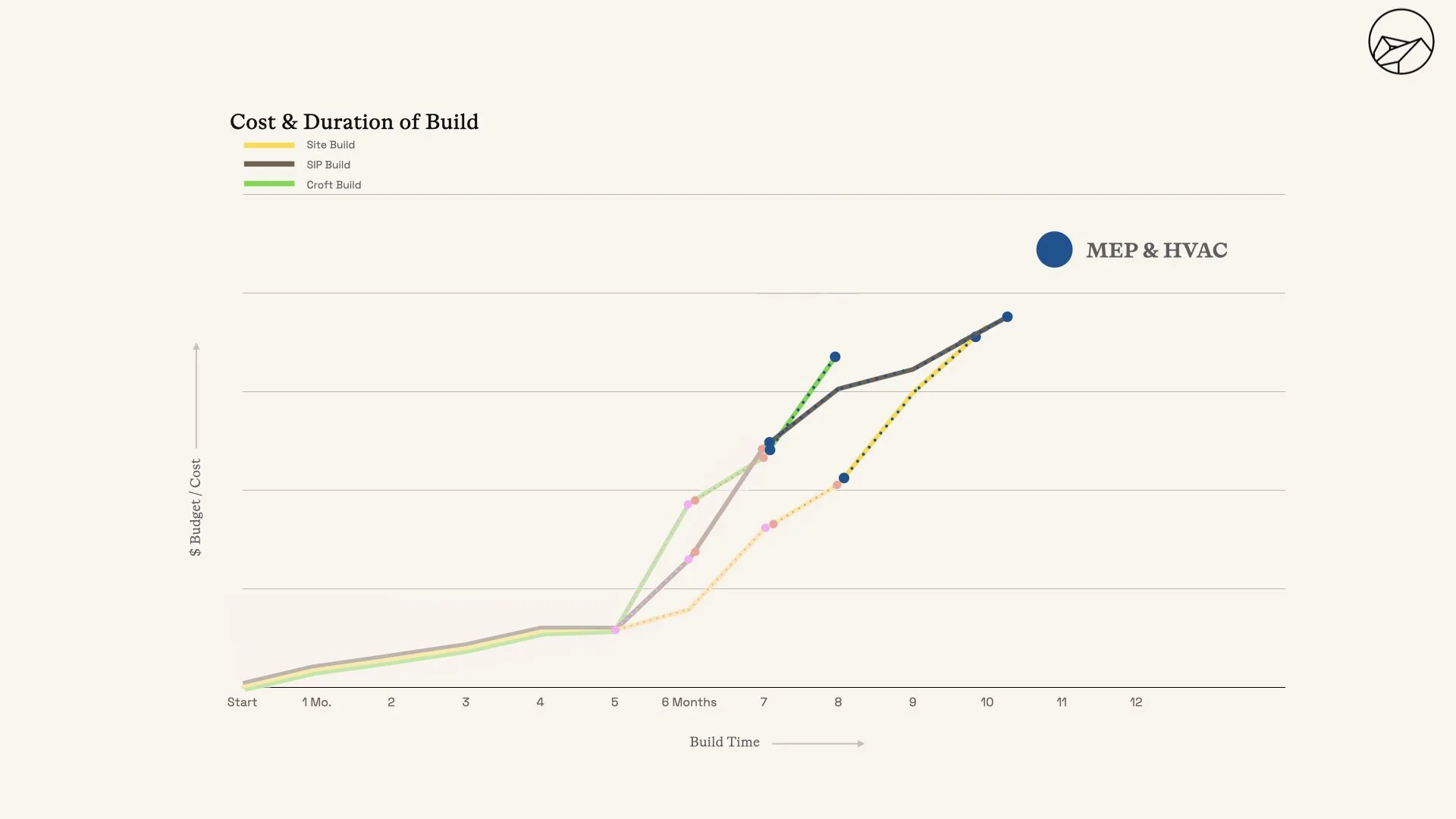
The paths continue to diverge! We’re not done, but Croft is already both fastest and cheapest at this point, because of our tight tolerances, our value-add layers, and our preinstalled components. The SIP panel buildings - which started out the cheapest— is now the slowest and most expensive. This doesn’t just mysteriously happen; it is through detailed intention that Croft raises the efficiency of all downstream subcontractor work. We typically see trades move 10-15% more swiftly through our projects thanks to the foresight, planning, and information sharing we bring.
Conversely, electricians and plumbers typically need to add 10-15% more time and labor when dealing with (notoriously fussy) SIP panel packages that have nowhere to route all the wire, conduit, and plumbing runs, and lack of guidance and documentation. Sometimes, these subcontractors just get frustrated and impatient, and drill/cut/notch into the SIP panels themselves to get their work done, leading to concerning results for the structural integrity of the building.
Holding steady, site-built construction is the torch-bearer to which others are judged. And we aren’t trying to replace site builders! We’re trying to give those builders superpowers. But the results are clear: at this phase, Croft’s integrated planning and exceptional product is lowering costs.
Now let’s finish out the building. We’ll need siding, interior wall finishes like drywall, paint or plaster, and the finish carpentry for things like trim, millwork, stairs, etc.
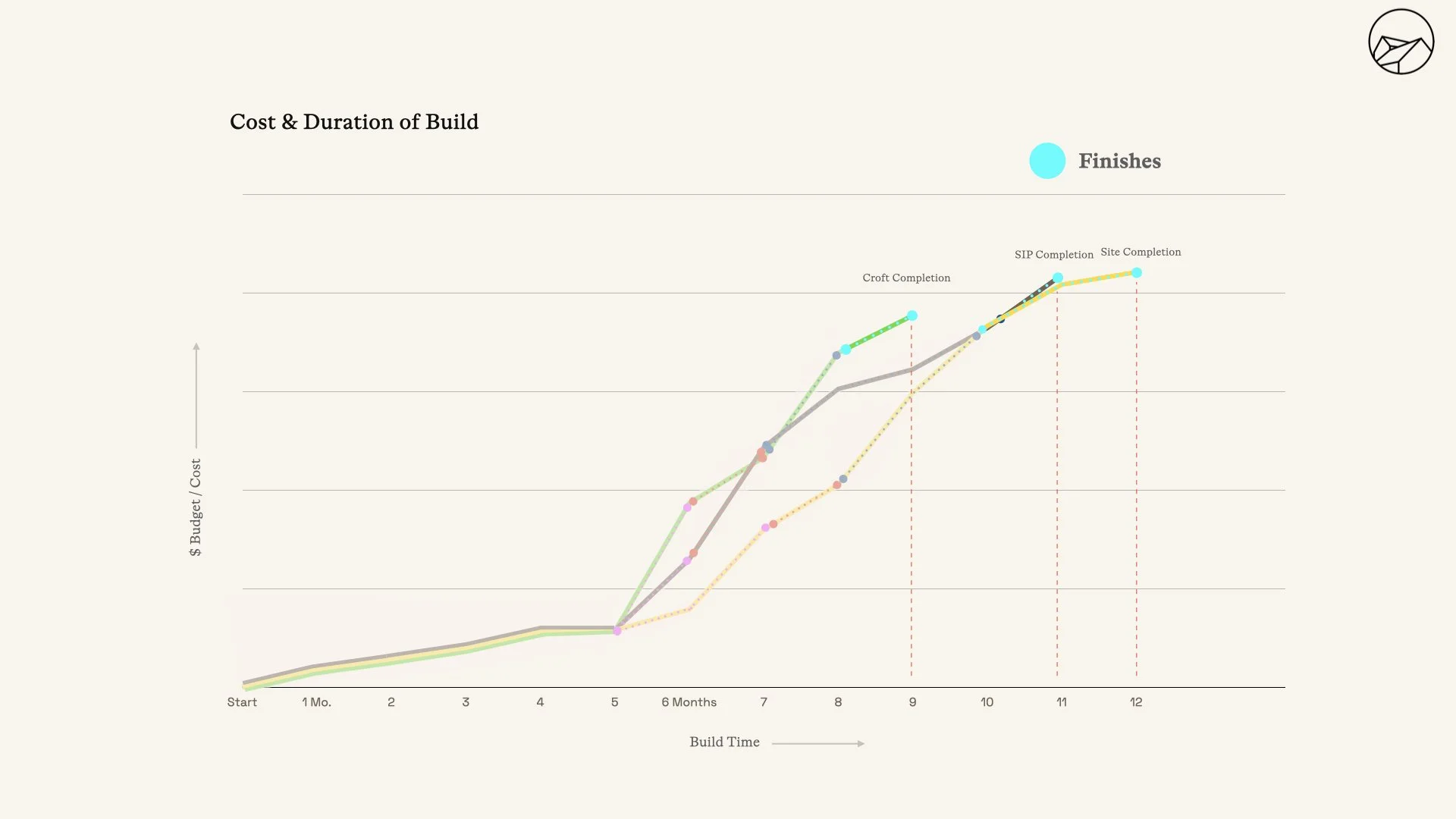
Maybe unsurprising for a claim we’d make on our own blog, but it’s obvious which horse we’d bet on here. This isn’t just a claim: we’re out there in the real world, boots on the ground, delivering on this promise, project after project. When you hit the finish line, Croft is clearly the fastest, most affordable solution.
Again, we’re not just streamlining our own work with prefab; we’re providing training and documentation for others’ scope with a very high level of fidelity— and then delivering a blank canvas with such consistent, tight tolerances that it radically speeds up the work of everyone downstream of us. You don’t have to trade quality for affordability. You just need to look beyond first costs on the spreadsheet! The world is confusing enough- let us make this one little part of it easier.
We could stop there, and feel great. But what about long-term value, you say? Well hey…thanks for asking.
Consider this analogy: What if you were investing in a business instead of a building? You would never invest in a company that lost money every year, and on the day of its founding, was predicted to go bankrupt in three decades. That would be absurd! But this is exactly what happens with most buildings in the U.S.
Let’s factor in the durability, building science, and exceptional energy efficiency of the Croft building, and see how it plays out over 50 years. As it turns out, the cost savings just compound over time.
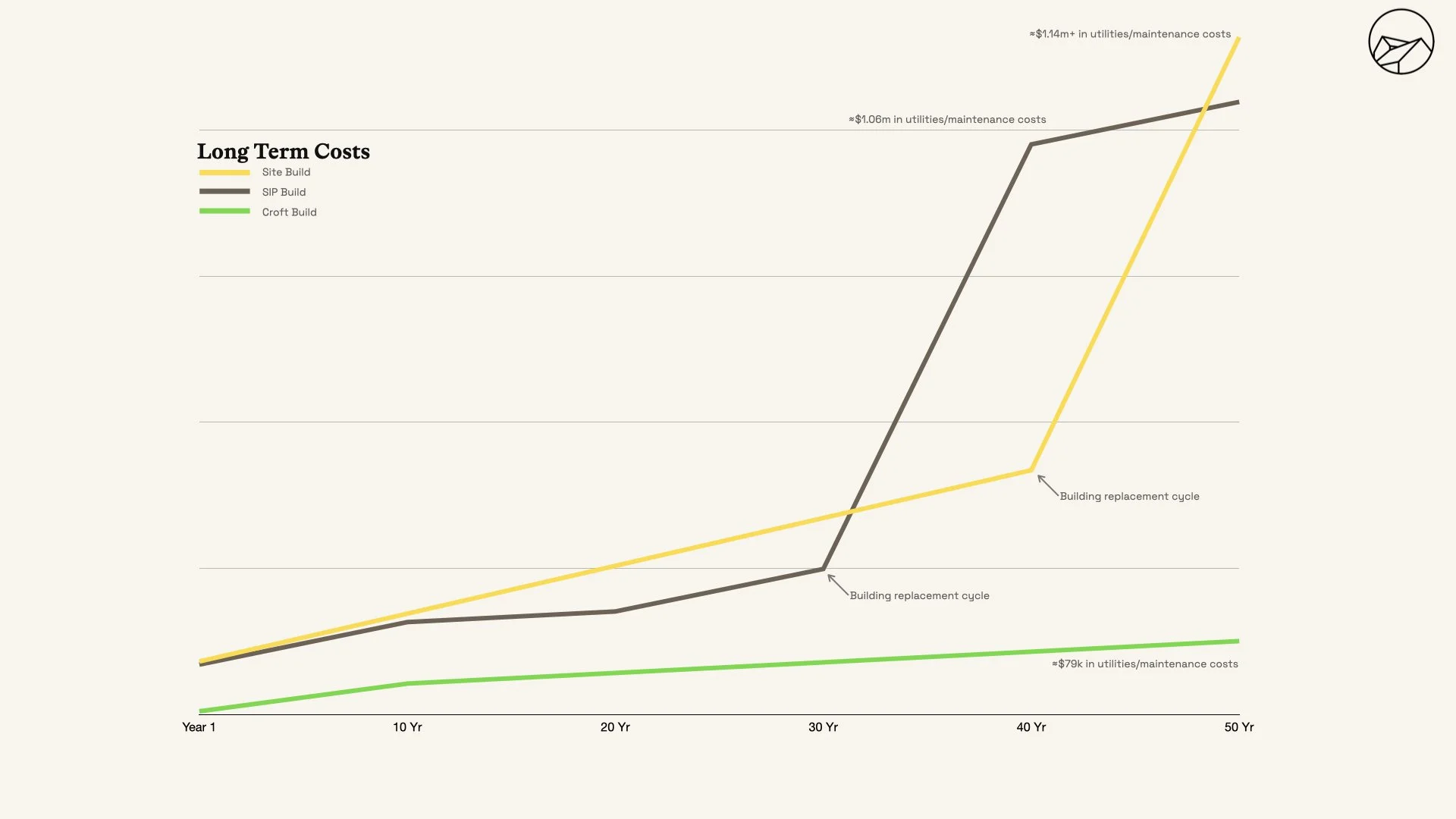
The typical lifespan for a foam-filled SIP building is around 25-30 years, and a typical code-minimum build not that much longer, around 35 years. This is an irresponsible use of resources, and a bad investment.
Croft, obviously, takes a different approach. By investing in the bones of the building— the weathertight shell— and constructing something that will last a few hundred years if maintained properly, we are transforming the long-term value of new builds.
Again, it’s easy to make these claims on a website; it’s much harder to deliver results in the real world. But we’re putting buildings on the ground every day that deliver on this promise. It’s June of 2026- and we just walked away from a jobsite where a Croft envelope— windows installed, ready for utilities and finishes, heck, we even preinstalled the finish floor in the factory— was delivered at $139/ft².
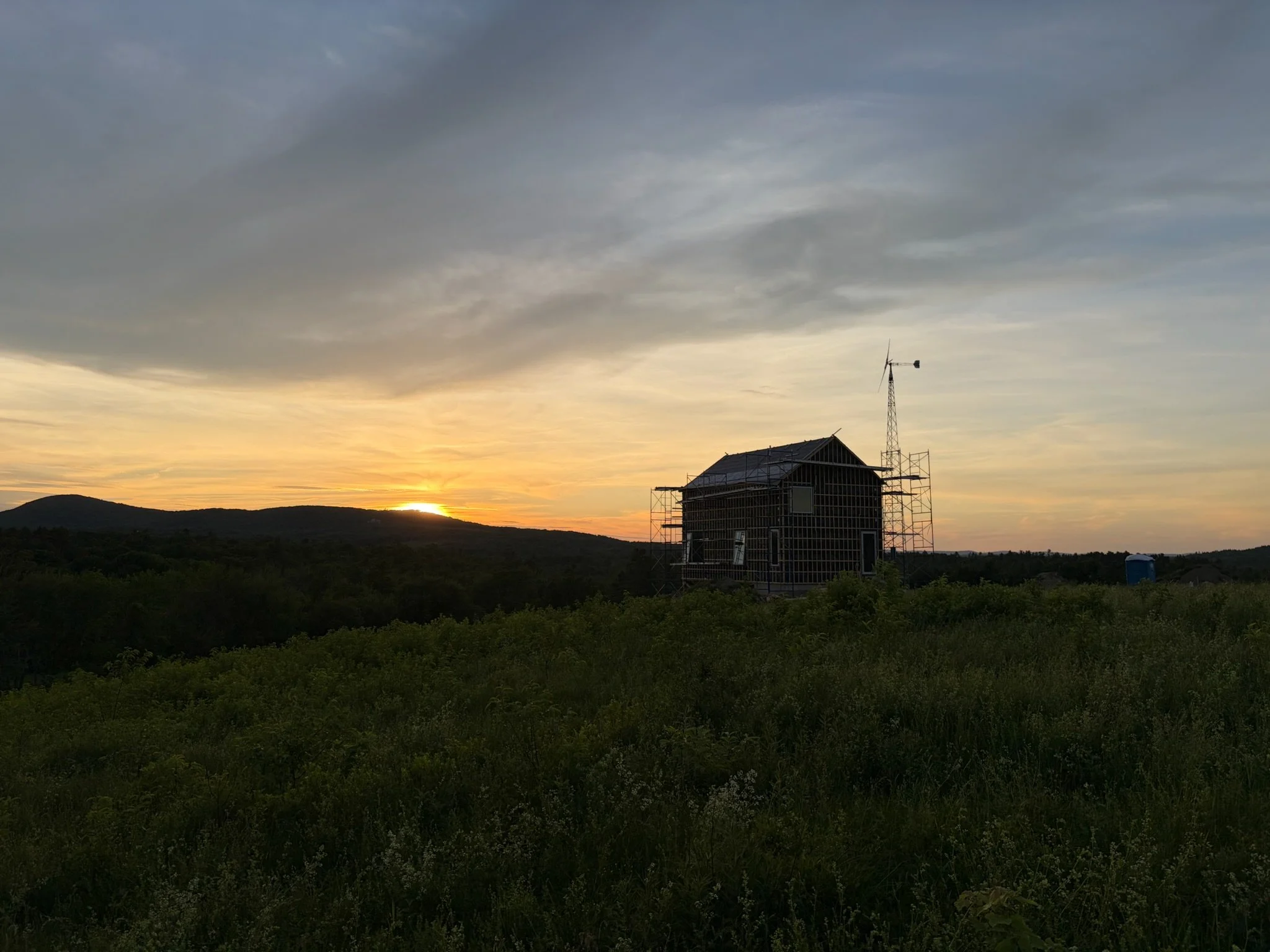
Photo by @topopaperpost on IG
In the future, we hope to get that number even lower, and we’ll always keep passing through every efficiency-gain and lesson learned to every new customer. Why? Because we want every new building to benefit from the savings, stewardship, and comfort we can generate with our approach. We care deeply about making the best possible buildings. (Also, if we have to be honest, it’s also just really fun.)
See you out there,
Croft