
The Briefly Expensive Road to Affordability
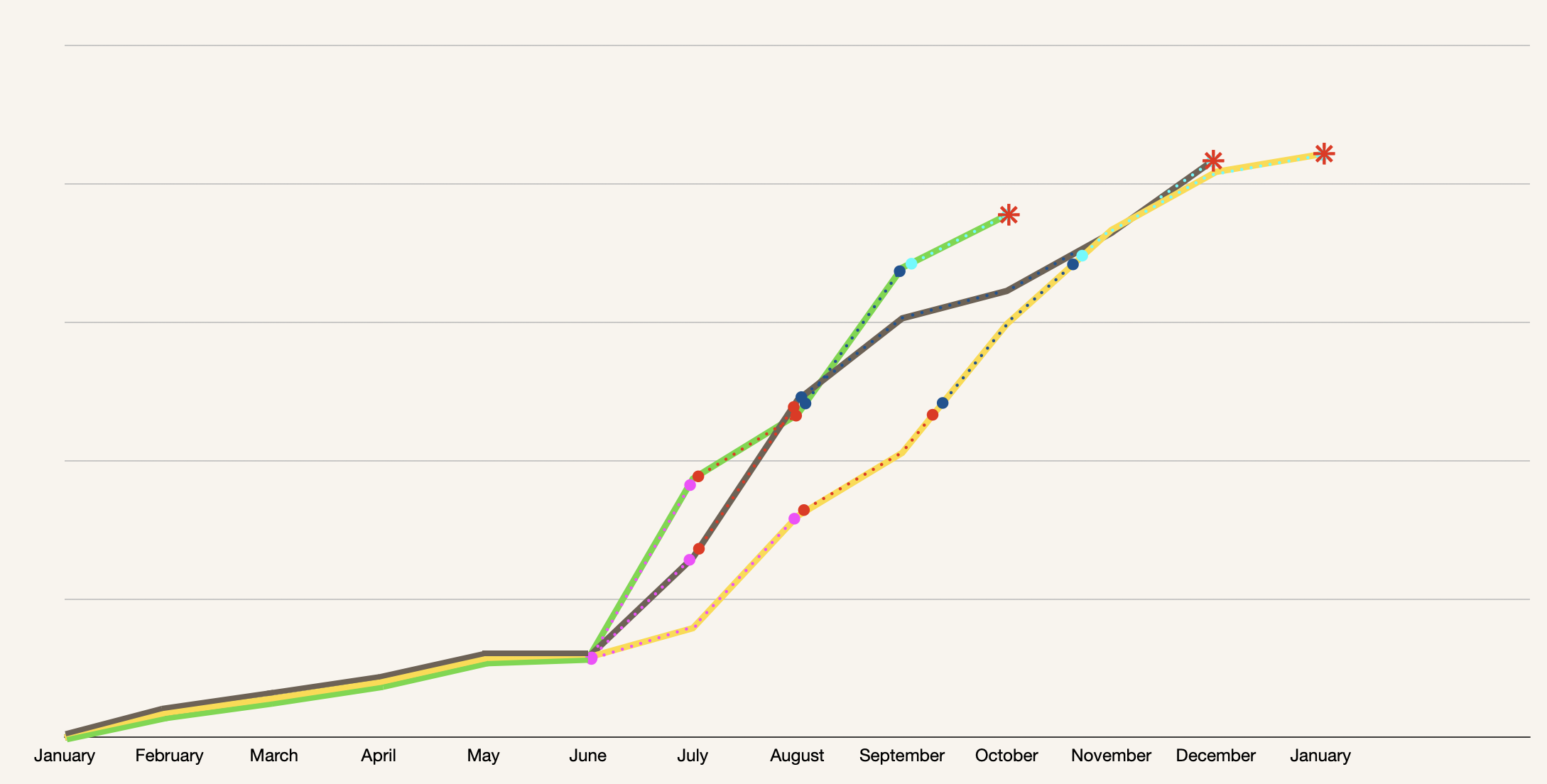
Focusing on one line item is useless.
We’re here to plant our flag. We can make better buildings, faster, and more affordably, with healthy materials that don’t cost the planet. No trade offs. Full stop. We’re quietly doing this work every day, instead of chasing media coverage. You’re forgiven for not noticing; it’s noisy out there in the world.
The construction and housing delivery market is desperate for solutions. While a lot of new companies are promising cost savings from technology, raw production speed, AI, novel materials, and predictability/repeatability, we’re here to tell you a secret: none of that stuff will solve it. How do we know? Because— free of any technological wizardry- Croft can already make a building 20x faster than we’re allowed to.
Myopically solving one piece of a very large problem doesn’t solve the whole.
The issues are: getting buildings permitted. Coordinating and approving the design. Educating the subcontractors and conveying the design intent and performance. Ordering the components with enough lead time. Caving to the bank’s painstaking demands to get financing in place. Cooling the egos involved. Interrogating, daily, how to make the impossible a little more possible.
Croft recognizes this— so while others try to solve one tiny aspect of the whole, we are instead calming the chaos both upstream and downstream of our work: communicating exactly the right information, in the right way, at the right time, to everyone involved. This makes it faster, yes, but more importantly: it makes it easy.
And this has big implications on cost. We care deeply about cost. Buildings are immense, complicated objects- it requires dozens, sometimes hundreds, of individuals working in concert to pull off a successful building project. All of that comes with very real costs. But here’s the rub: focusing on one line in a construction budget is useless without considering the holistic impact of that. And this is really, really hard to do with big complex things like buildings. Most folks just want their building, without being fleeced by a scammy contractor, but don’t understand the hair-pulling level of nuance at play in construction budgets.
So stick with us, because we’re going to show you how to reduce the costs and wind up with a better building. You’ll see how Croft is the Schrödinger's cat of construction budgets, both more expensive and more affordable at the time.
For some reason, folks mistake Croft for a bespoke, expensive solution. That’s a mistake: because while we aren’t the cheapest product, we are the cheapest solution. We took years of competitive study, costing data, and hard-won firsthand experience to put together the following information. We hope you benefit from it, and the overarching point we want to make here is simple: If you can afford to do a project, you can afford to do it with Croft.
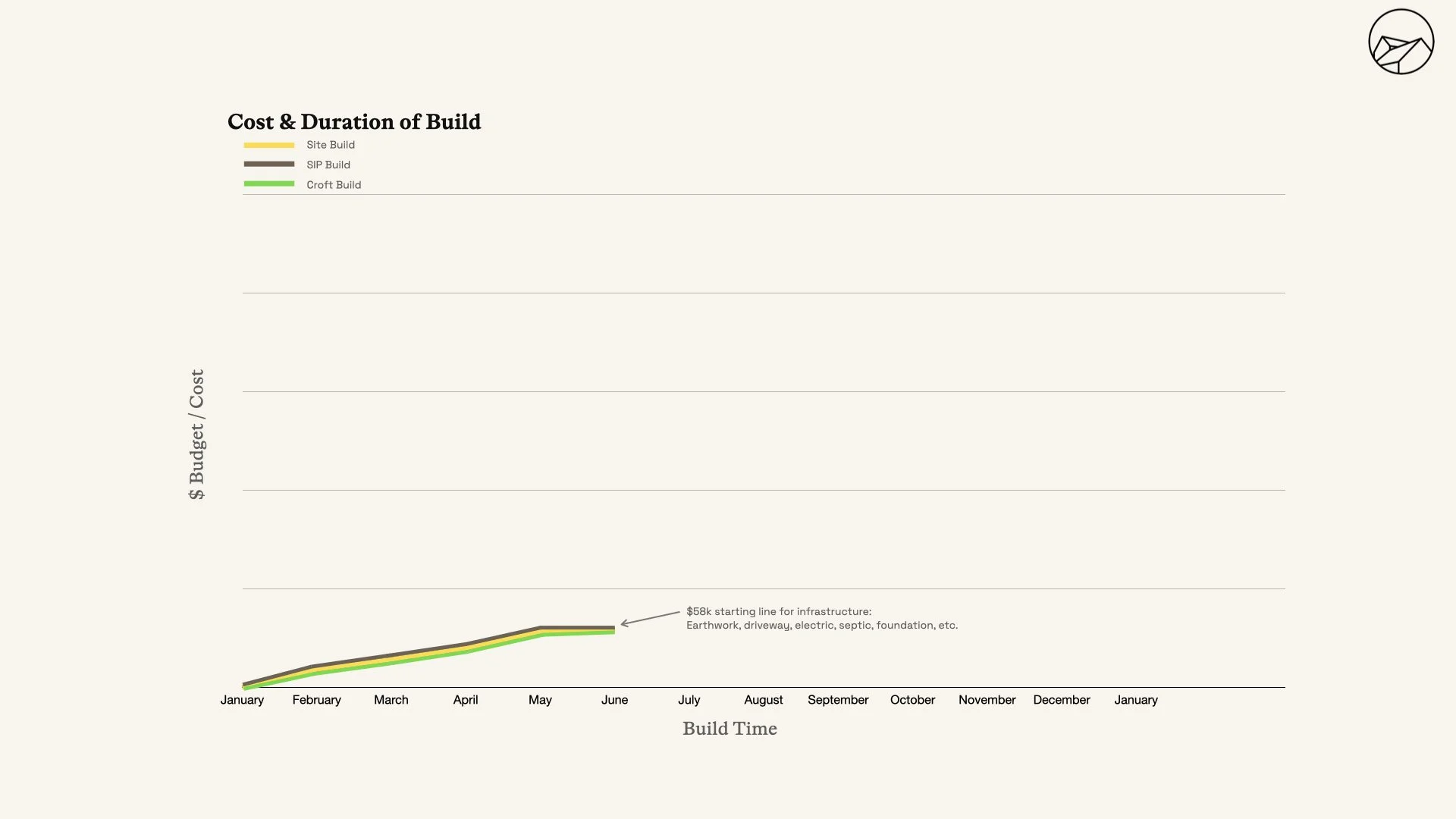
Example is a rural, single-family housing project.
(Ignore numbers for a moment. We pulled them. No matter the type of project, location, or scale, these ratios more or less stay the same.)
First is the cost of getting basic infrastructure in place. Water, electricity, a place to poop and an open place to locate the building; these have costs. It’s frustratingly easy to spend five figures only to get a muddy hole in the ground, with some pipes sticking out of it.(There will a future blog post where we will solve this problem, but let’s not get distracted.)
Suffice to say, developing a habitation on a piece of land— anywhere— already has significant costs.
Why? Because we want better buildings on the ground, everywhere. We want healthy, high-performance, carbon-storing buildings to become the standard, everywhere.